
Calls
Call for Sessions
Seeking dynamic and engaging sessions for ATBC2027 in Libreville, Gabon.
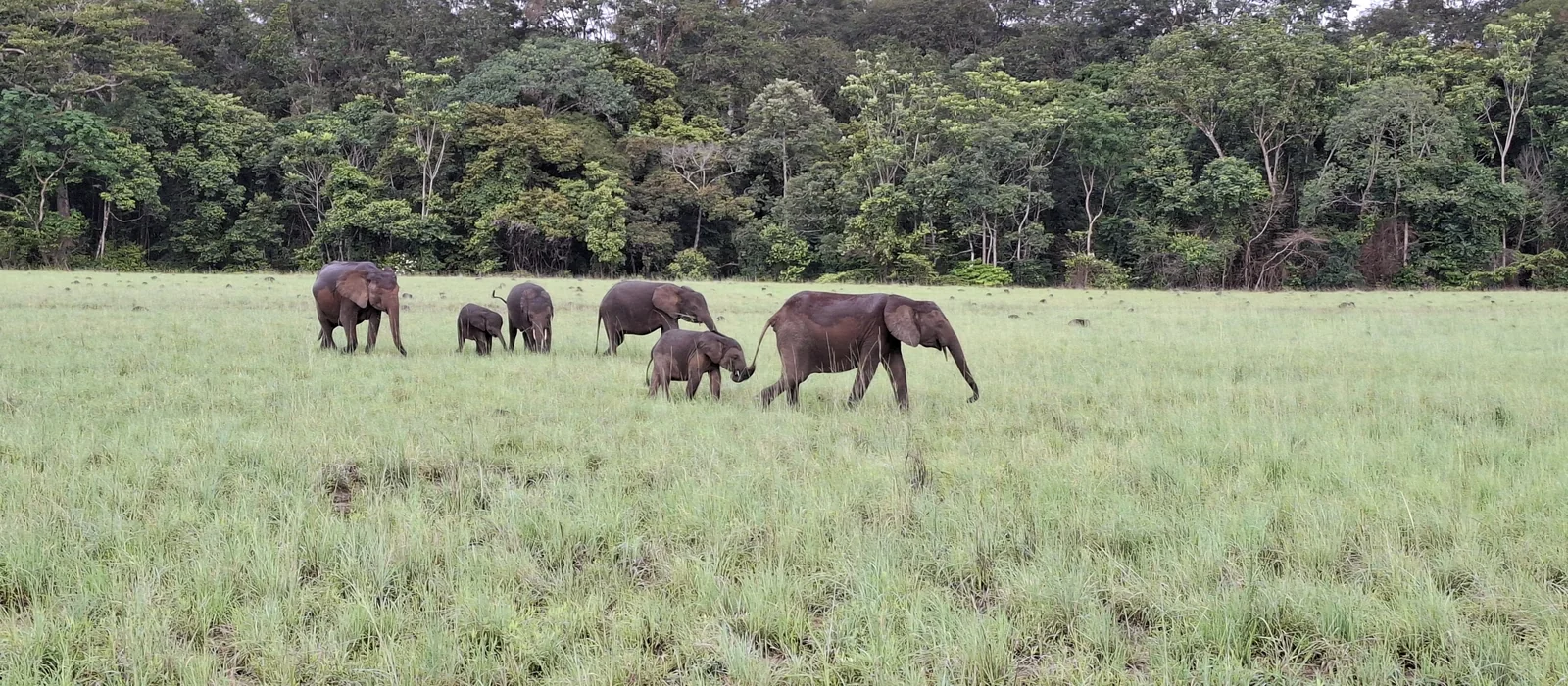
Photo: Adeline Fayolle — African forest elephants (Loxodonta cyclotis), Gabon
The Association for Tropical Biology and Conservation (ATBC) invites you to contribute to our 63rd Annual Meeting by submitting proposals for Symposia, Open Format Sessions, Courses, and Workshops. ATBC2027, under the theme "Tropical ecosystem resilience at the crossroads of a changing planet, policy, and conservation", seeks to highlight innovative research, foster disciplinary to transdisciplinary collaborations, and address pressing challenges in tropical biology and conservation.
This is an opportunity to shape the scientific and educational program of ATBC2027 by creating spaces for dialogue, collaboration, and capacity building.
Proposals are submitted in the participant portal, which opens with one email — no password. For questions, contact atbc2027@tropicalbiology.org.
Types of sessions
Symposia
Symposia focus on themes critical to the conservation and understanding of tropical ecosystems. Each symposium includes 6 speakers (1 session) or 12 speakers (2 sessions) who deliver comprehensive talks that together foster rich and diverse dialogue. Sessions are typically 2 hours long. To lower the carbon footprint of the conference and increase inclusivity, we encourage organizers to keep 1 out of every 6 talks (for 1 session), or 2 out of every 12 talks (for 2 sessions), for a remote participant who would benefit from this exposure and also improve the symposium.
Open Format Sessions
Open Format Sessions encourage diverse and creative ways of engaging participants. They should not be composed solely of traditional talks, although one or more short presentations may be included within a broader interactive format. Formats may include roundtables, panel discussions, debates, or other creative session structures. The duration is typically 2 hours. Similar to symposia, we encourage open formats to include remote participants, if the format would be compatible with someone being online.
Courses
Courses provide condensed, intensive instruction on a particular topic. They are ideal for in-depth exploration of methods, policies, or emerging technologies in tropical research. Organizers should have substantial expertise and be prepared to deliver comprehensive instruction. The recommended duration is 2 hours, though longer courses may be scheduled prior to the conference, depending on availability. Courses that could be held with some participants online are especially welcomed.
Workshops
Workshops are interactive, hands-on sessions designed to share skills, knowledge, or practices. They typically involve practical exercises and group discussions, encouraging active engagement. Organizers should prepare content, materials, and structure to ensure participants acquire the intended skills. Workshops are recommended to last 2 hours, with flexibility depending on program availability. Workshops that could be held with some participants online are especially welcomed.
Themes
We welcome sessions on a range of topics that resonate with the conference's theme "Tropical ecosystem resilience at the crossroads of a changing planet, policy, and conservation", including, but not limited to:
- Spatial and Temporal Patterns, Processes, and Mechanisms of Biodiversity in the Tropics
- Biodiversity Inventories and Monitoring in Tropical Ecosystems
- Biotic Interactions in Tropical Ecosystems
- Ecosystem Services/Contributions and Values of Tropical Ecosystems to People
- Impacts of Natural and Anthropogenic Disturbances on Tropical Ecosystems
- Ecology and Social-Ecology of Aquatic Systems in the Tropics
- Marine and Coastal Ecosystem Resilience in the Tropics
- Fisheries, Food Security, and Sustainable Use of Tropical Marine Resources
- From Rivers to Reefs: Connectivity and Resilience Across Tropical Aquatic Ecosystems
- Social-Ecological Drivers and Solutions for Managing Invasive Species
- Global Change: Adaptation and Resilience in Tropical Ecosystems
- Conservation Policy and Practice in the Tropics
- Structure and Functioning of Tropical Ecosystems
- Community and Population Ecology of Tropical Species
- Genetics and Evolutionary Processes in Tropical Systems
- Ecophysiological and Functional Traits Research in Tropical Systems
- Phylogenetics and genomics in tropical biology and conservation
- Long-Term Dynamics of Tropical Forests
- Multi-Actor Inter- and Transdisciplinary Approaches to Tropical Conservation and Human Well-Being
- Ecological Restoration in Tropical Ecosystems and Productive Landscapes
- Sustainable Management of Tropical Timber and Non-Timber Forest Products
- Wildlife Conservation and Management in the Tropics
- Community Engagement, Local Knowledge, and Social-ecological Approaches for Tropical Conservation
- Cutting-Edge Methodologies and Tools for Tropical Biology and Conservation
- Sustainable and Socially-Just Agroecological Land Uses in the Tropics
- Drivers of Change in Tropical Social-Ecological Systems
- Soil Ecology in Tropical Ecosystems
- Social-ecological Effects of Land Cover and Land Use Change on Tropical Forests
- Urbanization and Ecology of Tropical Ecosystems
- Climate Change Effects and “One Health” in the Tropics
- Ethics and Environmental Justice in Tropical Conservation
- Citizen Science and Participatory Monitoring in Tropical Ecosystems
- Microbial Biodiversity and Its Role in Tropical Ecosystems
- Sustainable Ecotourism and Its Impact on Tropical Conservation
- Water Security and Tropical Ecosystems
- Education and Capacity Building for Tropical Ecosystem Conservation
- Empowering Local Communities
- Conservation and Human Well-Being initiatives in the Tropics
- Transformations Towards More Sustainable Future Pathways for Tropical Ecosystems
- Tradeoffs and Nexus Between Food, Water, Energy and Climate Mitigation Goals in the Tropics
- Business Options for the Conservation of Tropical Biodiversity
- Indigenous and Local Knowledge, Values and World View on Tropical Biodiversity
- Decolonizing Tropical Ecology: Epistemic Justice and Reciprocity
- Gender Studies of Tropical Systems
- Data analysis and interpretation in ecology
- Conservation techniques and sustainable practices
- Advocacy and policy-making in biodiversity conservation
- Professional development and mentorship in tropical biology
Submission process and guidelines
All proposals must be submitted through the online submission system. Proposals sent via other channels will not be considered.
Required information — Symposia / Open Format Sessions
- Organizer(s) information: name, affiliation, and email address
- Title: maximum 15 words
- Description (300–400 words): a clear summary of the background, scope, goals, and objectives of the session. Write for a broad audience and avoid overly technical language
- Justification (100–150 words): explain how the proposal meets the review criteria. This section should complement, not repeat, the description
- One-sentence summary (max. 50 words): a concise version of the session description for inclusion in the final program
- List of potential speakers/participants: names, affiliations, emails, and tentative talk titles (required for symposia only; minimum 5 confirmed speakers). Not applicable to courses or workshops
- Visual material: at least one relevant photo, illustration, or diagram to represent the session in promotional materials (recommended dimensions: 1280 × 720 px)
- Additional comments (optional)
Additional information — Courses / Workshops
- Program outline: a detailed agenda or structure of the course/workshop
- Technical and logistical requirements: any specific needs ATBC2027 should provide (e.g., room setup, projector, internet access, flipcharts)
- Materials for participants: specify what attendees should bring (e.g., laptop, notebook, software)
- Number of participants: minimum and maximum expected enrollment
Key dates
- Opens
- 10 September 2026
- Submission deadline
- 6 November 2026
- Evaluation
- 16–27 November 2026
- Decisions notified
- 1 December 2026
Accepted symposia then need their speakers to submit abstracts: that call runs from 1 December 2026 to 26 February 2027.
Evaluation criteria
- Merit: Proposals should aim for significant advances in tropical biology and conservation, showcasing innovative, interdisciplinary, or transdisciplinary approaches with potential for new conceptual insights.
- Broader impacts: Sessions must connect scientific research to conservation action, influencing policy, supporting practitioners, and contributing to ecological sustainability. Consideration of societal and cultural dimensions will also be viewed positively.
- Audience appeal: Proposals should engage a wide range of ATBC2027 attendees, encouraging dialogue across disciplines, sectors, and regions.
- Structure and organization: Sessions should be coherent, well-structured, and designed to foster meaningful knowledge exchange. Clear objectives, logical flow, and time management are expected.
- Relevance: The proposal must align with the ATBC2027 theme and resonate with the academic and applied interests of attendees.
- Diversity and inclusion: A balanced and inclusive lineup of participants is essential. Proposals should prioritize gender balance, geographic diversity, and representation across career stages, with opportunities for early-career scientists.
- Feasibility: Proposals should demonstrate realistic planning, confirmed participation, and achievable scope within the allotted time and resources.
Session organizer(s) responsibilities
- Responsibility for speakers/participants: Organizers are responsible for assembling and confirming the list of speakers/participants for their session.
- Communication of acceptance and requirements: Upon acceptance, organizers must promptly communicate with their speakers/participants — confirming registration status, detailing abstract-submission requirements (for symposia) and deadlines, providing scheduling information, and clarifying expectations for conference participation.
- Scheduling information: Organizers should inform speakers that the session could be scheduled on any day of the meeting.
- Conference registration requirement: Organizers must clearly communicate that registration for the conference is mandatory for all speakers/participants.
- Abstract submission (symposia only): It is the organizer's responsibility to ensure that speakers submit their abstracts on time. Failure to submit an abstract by the deadline will result in removal from the session. Once a session is accepted, organizers may request necessary changes or replacements, provided they are communicated promptly and remain consistent with conference policies.
One presentation rule
To ensure a diverse range of voices and ideas, ATBC enforces the "one presentation" rule for all speakers. Each presenter is limited to only one presentation during the conference. This rule applies to oral sessions, posters, and symposia. The policy is designed to maximize the variety of perspectives and topics covered, and to give a wider array of delegates the opportunity to showcase their work.
Cancellation policy
It is disruptive for the meeting program to have accepted sessions cancelled. Please submit a session proposal only if you are certain to attend the meeting and are willing to fulfill your responsibility as a session organizer.
In cases of unavoidable circumstances, the principal session organizer may be replaced by one of the co-organizers. If a presentation must be cancelled, the speaker should immediately notify the session organizer, whose duty it is to identify a replacement — ideally someone who is already a co-author, though the organizer may identify another suitable person.
ATBC does not provide special financial assistance, stipends, or free registration to individual speakers/participants of the conference. Session organizers should notify potential speakers/participants of this policy when they are invited to participate. If needed, individual symposium organizers are responsible for identifying funding sources for the speakers in their sessions.
Contact
For any questions related to this call, please write to us at atbc2027@tropicalbiology.org.